

The Bewitching - Silvia Moreno-Garcia - ★★.½
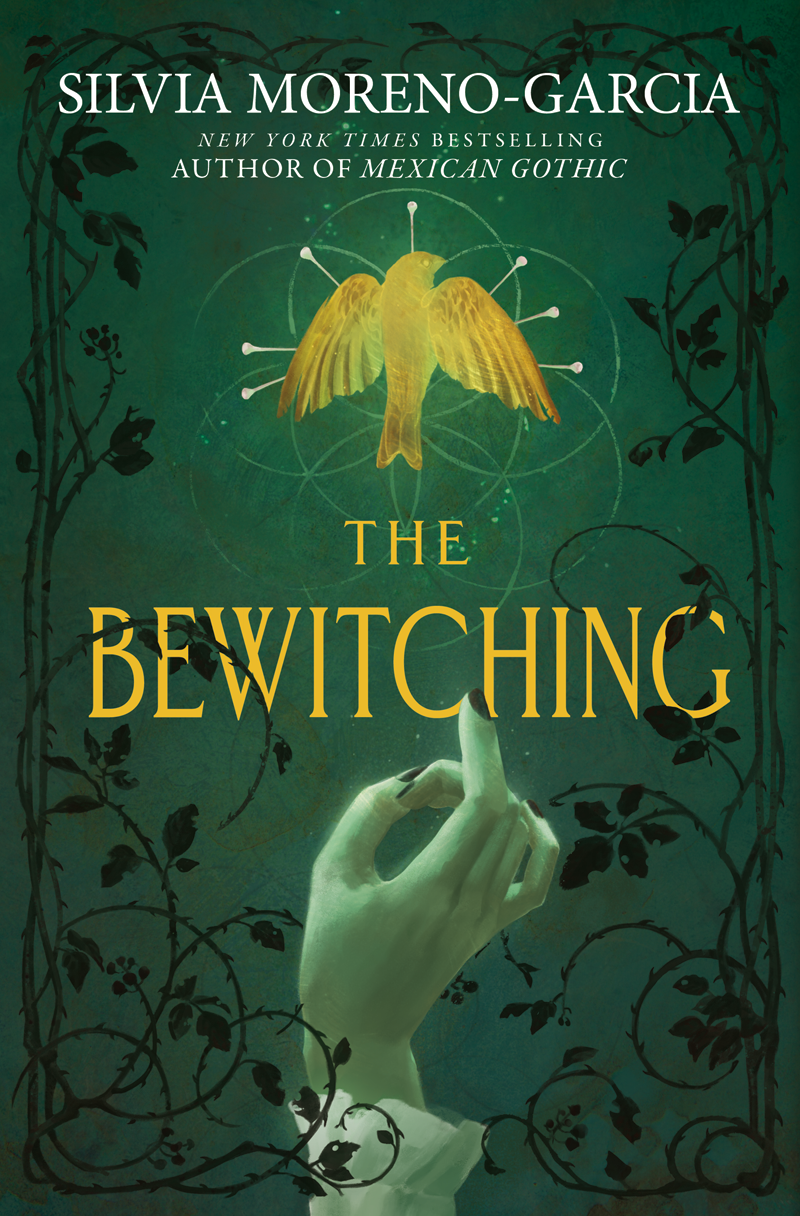
AUTHOR: Silvia Moreno-Garcia
GENRE: Horror-Fantasy
PUBLICATION DATE: July 15, 2025
RATING: 2.5 stars.
In a Nutshell: A multi-generational horror-suspense focussing on three women and their dark experiences with witchcraft. Good historical atmosphere and a couple of compelling characters. Needlessly intricate, guessable antagonists, dragged pacing. One incestual relationship (not sure if it’s culturally/historically accurate). The horror comes only in bits and spurts. I liked some parts of this novel but wasn’t too impressed. Not sure if this was because of the audio version.
Plot Preview:
1998. Minerva is a graduate student who wants to write her dissertation on the life of Beatrice Tremblay, a talented but relatively obscure horror author with one famous novel and who had been a student at the same college in the 1930s. As Minerva tries to find more information on Beatrice, she finds herself grappling with the same dark forces that Beatrice once did and referred to in her novel, which was supposedly inspired by the true event of her friend Ginny going missing. Minerva also realises the parallels in her experience with what was faced by her great-grandmother Alba in 1900s Mexico.
The story comes to us from three characters in three unequal timelines: Minerva from 1998 and Alba from 1908 both written in third person and getting a mostly equal share of the narrative, and Beatrice in 1934 written in first person and getting fewer chapters.
While I haven’t read much of Silvia Moreno-Garcia’s works (I have read only the novel ‘Gods of Jade and Shadow’ and two short stories of hers, all of which I liked), I still admire her. For one, she doesn’t shy away from her roots, and skilfully incorporates authentic Mexican mythology and culture in her writing. At the same time, though horror is her forte, she doesn’t recycle the same storylines in her books. Each novel has a distinct plot that doesn’t seem to have anything in common with her other works except that they all have horror-fantasy elements. Further, she is also outstanding in recreating a historical era and its atmosphere.
In this novel, we can see these strengths of hers in full swing. Unfortunately for me, these are the only aspects where the book mainly delivered. It was otherwise a fairly forgettable experience, partly because of how unwieldy the plot gets.
Bookish Yays:
👻 The atmosphere. I appreciate the effort this author puts into creating spooky vibes.
👻 The depiction of the racist and ignorant attitude towards international students in American universities. A small but well-written component of the story.
👻 The portrayal of Mexican culture and its belief system regarding the occult. Very interesting!
👻 The trivia connected to the horror genre and horror authors. The novel pays homage to several horror greats through its writing choices.
👻 The excellent use of the settings of New England and Mexico.
Bookish Okays:
☠ The secondary character development. Some interesting characters here, but they often go through a random flip in attitude. One character’s arc in Minerva’s timeline is unnecessarily built up because he doesn’t even come up later.
☠ Alba’s timeline is the most intriguing with a proper rustic and creepy feel. Unfortunately, the ending of this timeline was not at all enjoyable to me.
☠ The sexual tension and the resultant darkly romantic relationship between Alba and her maternal uncle – yikes! Not just was the grooming awkward to read, but it was also tough to understand why no character in the book considered it incest. Then again, I don’t know if this writing choice was a deliberate way to exacerbate the horror vibe, or if it might be indicative of actual relationships in historical Mexico. (Some cultures allow avunculate marriages; I am not aware if Mexico is/was one of these.) Putting it under Okays instead of Nays just to give it the benefit of the doubt because this writing choice did add to the creepiness.
☠ The suspense aspects, coming from the mystery related to the disappearance of Beatrice’s friend. While the suspense starts off well and even develops in an eerie manner, the poor character development kills some of the intrigue. The antagonists are fairly guessable in each timeline as there’s only one possible suspect in each.
☠ The horror. The depiction of witches is not like what we usually see in this genre, which I like. But some of the reveals are just unbelievable. There’s a limit to how much disbelief can be suspended. Plus, a lot of the spooky content feels more like a ghost story than like a witchy one.
Bookish Nays:
👹 “Back when I was a young woman, there were still witches.” – a sentence oft repeated in the novel, well before the said witches even come on page. So we know about the witches’ existence long before we see the witches’ presence. 🤦🏻♀️
👹 The use of the triple narrative for plot development. Each timeline has a complex plot with many main and side characters, so it is a bit tough to remember everything that’s happening (especially on audio). The link across the timelines is tenuous at best, and Alba’s timeline could even have been eliminated, with the essentials possibly shifted to Minerva’s timeline as reminiscences or flashbacks.
👹 Minerva’s timeline. Starts off decently but then somehow loses its way as she seems more obsessed with finding out what happened to Ginny than about Beatrice Tremblay’s life. There was no punch to this timeline, which is sad as it was given the most prominence in the book.
👹 The Beatrice Tremblay narrative in first person. Surprisingly the weakest and blandest of the three timelines, which is odd as her being an author should have led to more memorable writing. But this track was quite repetitive in its plotting and foreshadowing. Further, it sounds more like a personal diary than like the manuscript it is supposed to be.
👹 The pacing – so very dragged. Nothing happens for most of each timeline and then suddenly a lot happens. Beatrice’s track leaves several things incomplete.
👹 All the attraction-love-lust nonsense in all three timelines. There was an overdose of sexual undertones.
👹 The ending. Too rushed and partly a deus ex machina.
🎧 The Audiobook Experience:
The audiobook, clocking at a little more than 14 hours, is narrated by Gisela Chipe. She is a good narrator but somehow dull. I never felt gripped by her narration, even during tense moments. Also, given how we hear three distinct women’s perspectives, I would have preferred three narrators for this version. I wouldn’t recommend the audio to newbies as it gets quite intricate.
Overall, while I liked some parts of this novel, I wasn’t that bewitched by it. A part of me wonders if this was because the audio didn’t work too well for me, but I feel sure I wouldn’t have loved the book even if I had read it. Then again, it does offer an unusual take on witches, and has great setting and atmosphere.
Recommended to readers who might enjoy horror-fantasy with some spooky vibes, and don’t mind the slow pacing or incestual content.
2.5 stars, rounding down wherever applicable for the audio version.


Comments
Post a Comment