

A Guardian and a Thief - Megha Majumdar - ★★★★.¼
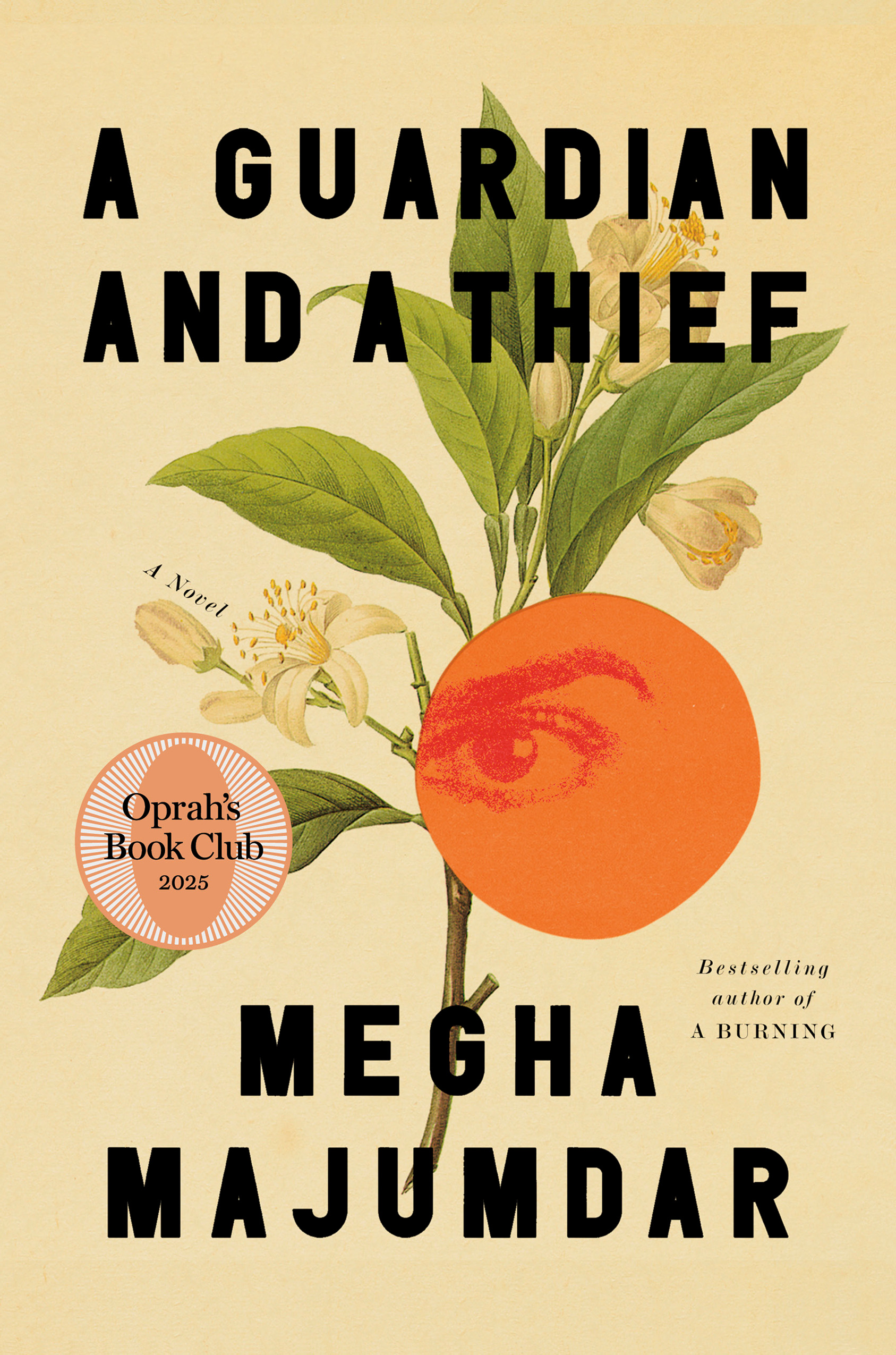
AUTHOR: Megha Majumdar
NARRATOR: Soneela Nankani
GENRE: Dystopian Fiction
PUBLICATION DATE: October 14, 2025
RATING: 4.25 stars.
In a Nutshell: A near-future literary dystopian novel set in India. Character-oriented, steady-paced (but not fast). True to present reality despite being set in an unknown future time. Excellent exploration of human behaviour. Much recommended. Not for those looking for light, relaxing stories.
Plot Preview:
Near-future Kolkata, India. Ma, her two-year-old daughter Mishti and Ma’s elderly father Dadu have to stay just a few days more in their climate-battered city with its heat and food shortage. They have finally procured their climate-approved visas, and a week later, they will join Ma’s husband in Michigan USA. To their horror, the next morning, Ma’s purse is stolen, and with it have gone their visa-stamped passports. Can Ma somehow find those valuable documents before their flight?
The story is set over the course of one week, and comes to us in parallel from the viewpoint of Ma’s family with the third-person perspectives of all three characters, and of Boomba, the thief who took the purse.
I am a big fan of this author’s debut novel, ‘A Burning’. It has its critics, primarily for its portrayal of certain segments of India, but I found it offering a brutally honest and unbiased view of the then-present state of the country. (Things are worse now, but let’s not go there.) As such, I had been keenly looking forward to her sophomore work.
The dystopian angle of this novel took me by surprise because I had expected another present-time story. But the author manages to intertwine climate dystopia and present chaos into one compelling narrative.
Bookish Yays:
😍 The storyline. Unusual, stark, brilliant. I haven’t read anything like it before. I always appreciate creative plotlines in this world of copy-paste.
😍 The parallel narratives from the two perspectives. It’s not just a story of a guardian vs. a thief, or of good vs. evil, or even of rich vs. poor. It is all of these and none of these at once.
😍 The title and its significance. After a point, you will be unsure about who exactly is the guardian and who’s the thief. It goes to show, as we all should remember, that things (and people) are never clearly binary; there’s always a gradient.
😍 The shifting third-person narration coming from characters of various age groups. I absolutely loved how each third-person sounded authentic to their age.
😍 The four main characters: Ma (age undeclared but possibly in her late twenties), senior-citizen Dadu, toddler Mishti, and teenaged Boomba. It is interesting that the story never names Ma (‘mother’) and Dadu (‘grandfather’), so their identities are fixed in relation to Mishti. Each of the adults is a complex character with many shades. All four are memorable.
😍 The intricate exploration of human psychology in times of challenge and uncertainty. Excellent! Many scenes made me wonder what I would do in the same place. I couldn’t agree with all their decisions, but that’s what made the characters more nuanced.
😍 The portrayal of the pre-immigrant situation. Most immigrant stories only highlight what happens AFTER a person has migrated to another country. This look at the final week of residency – with the mixed feelings of dread, nostalgia, and anticipation – is cleverly done.
😍 The setting of near-future Kolkata. Bears so much resemblance to the actual city but with the added fictitious element of dystopia. Simply brilliant! I loved how the city is both recognisable and unrecognisable at once.
😍 The prose. Lyrical without being purple. It’s so easy to visualise the world thanks to the crisp descriptions.
😍 The depiction of climate change and its impact on citizens. We aren’t yet at the level of desperation shown in this story, but the writing is such that the plot doesnt even seem farfetched. I appreciate how it highlights the apathy of billionaires even as the lives of the poor continues to worsen – this is not even a futuristic scenario but very much a present issue across the world. Ma’s family being somewhat privileged but not ultra-wealthy gives us an interesting triple perspective into the impact of such social calamities on the poor, middle-class and rich.
😍 Given that the essence of the book is about human behaviour during difficult times, a lot of the book feels relevant these days, especially with respect to immigration laws, dwindling natural resources, and climate change deniers. It’s always nice when fiction holds such a mirror to facts.
Bookish Okays:
🤔 The ending. Have you ever read a book where your head knows that the ending makes sense but the heart wants to protest vehemently? Yeah, this is one such case.
🤔 A couple of the developments in the final section were overly coincidental, which took away from the impact of the otherwise strong plotting.
The Audiobook Experience:
The audiobook, clocking at just 7 hrs 4 min, comes via a multi-narrator cast led by veteran Indian-character narrator Soneela Nankani. The audio production is exceptional. Several scenes involve phone conversations, and these use one narrator for each character, including for Mishti. I am not sure if Leela Tapryal, the narrator voicing Mishti, is actually a toddler, but she sure sounded like one, reminding me of Boo from ‘Monsters Inc’. I’d definitely recommend the audio version. Despite the parallel narratives and the few flashbacks, the audio is fairly straightforward to comprehend.
Overall, this character-oriented novel turned out to be just as compelling as I had expected, even though the storyline wasn’t what I had expected. (I had gone in blind, so I didn’t get any clues from the blurb about the dystopian setting.) This offers a realistic depiction of India despite being set in an unknown future. The characters only add to the story.
Definitely recommended to readers who enjoy character-driven works and OwnVoices narratives in uncommon settings. Keep in mind that the tone of the novel is more ominous and depressing than light and relaxing.
4.25 stars. (I can't bring myself to rate it higher because of the ending. It wasn’t poorly written but…)


Comments
Post a Comment