

There Was a Time for Such a Word - Gianni Solla - ★★★.½
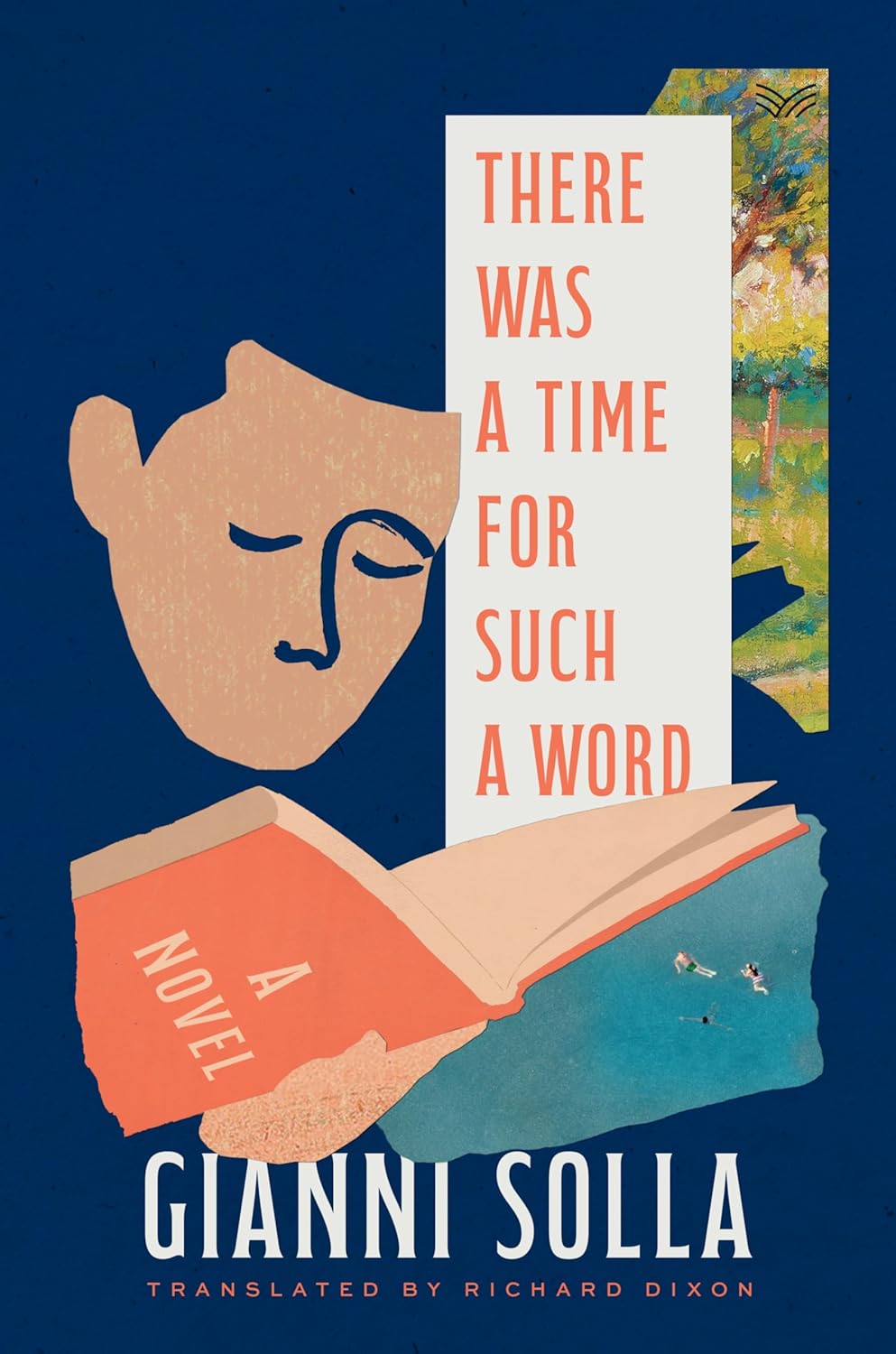
AUTHOR: Gianni Solla
TRANSLATOR: Richard Dixon
GENRE: Historical Literary Fiction
PUBLICATION DATE: November 11, 2025
RATING: 3.5 stars.
In a Nutshell: A character-oriented historical fiction set in 1940s Italy about a teen whose life changes one summer. Good character development, interesting incorporation of the fascist propaganda in WWII Italy. A plotline that is dark and hopeful at the same time. Three sections that are a bit too distinct from each other. The ending, though impactful, left me with mixed feelings. Very relevant in today’s world despite the historical setting. Recommended, but not to all.
Plot Preview: (This preview barely represents this complex story. The GR blurb contains more details if you want a preview beyond the initial few chapters.)
1942. Caserta, Italy. Davide is the illiterate son of a pig farmer. Born with one leg shorter than the other, he knows he is destined to stay in his small town but yearns for a different life. Two key incidents initiate a change. One, when Teresa (Davide’s friend and the daughter of the local ropeworks owner) starts teaching him how to read and write, and two, when Nicolas arrives to Caserta as one of the Jews from Naples forcibly relocated by the Fascist authorities. These events change not just Davide’s life but also Teresa’s and Nicolas’.
The story comes to us in Davide’s first-person perspective over three distinct periods of his life.
Bookish Yays:
📚 Teresa. I HAVE to mention her before the two boys. What a beautiful character! I loved her spirit.
📚 Nicolas, and by extension, his father. Their arcs are absolutely not like the typical “European Jews during WWII” portrayal. I love how the writing stressed more on his personality than on his identity while still showing how one was incomplete without the other in such a climate.
📚 The representation of the thinking and culture of rural patriarchal 1940s-Italy.
📚 The portrayal of the Jews forced away from their homes. This isn't a concentration camp narrative, but an angle we don’t often see in historical fiction. A good depiction of Jewish persecution without being an outright story of the holocaust.
📚 The power of words, literacy and language – very important to openness of thinking and imagination.
📚 The danger of Fascism and Fascist propaganda. Set in pre-internet times, but so relevant today as well. The dictatorial and inhumane government decisions. The brainwashing to spread hate against those not belonging to the dominant group. The othering of legitimate citizens. How disappointing that there is no difference in many political leaders from 1945 and 2025!
📚 So many beautiful, thought-provoking quotes!
📚 The writing. Retains fluid language without compromising on pacing or comprehension. Credit to the author and the translator.
📚 The translator's note at the end. The perfect conclusion to the book.
Bookish Okays:
🎭 The approach of having three distinct sections, each set in a specific phase of Davide’s life. Akin to ‘The Kite Runner’, but not as fluid. At times, Section Two felt like a totally different book because of the minimal continuity. It took me some time to get used to the huge time jump and change in setting, especially when the earlier section seemed to end without making many things clear.
🎭 Davide. Flawed, which is what makes him compelling but also tough to relate to, especially during the second section. I couldn’t agree with many of his decisions. That said, the author sketched his personality well. Davide actually grows through the story, but not necessarily in a linear way and not overnight. Such behavioural change is more true-to-life.
🎭 Davide’s disability. Love the rep. Disliked the fact that his life changed for the better mainly after his disability was taken care of. Then again, it was true to the period, so this could go either way for readers.
🎭 Davide’s instant connection to Nicolas feels abrupt. Not sure if this is a translation issue but I needed something more there. I kept getting mixed signals about whether the plot was moving towards a MM love story, but it ultimately didn’t. Of course, it doesn’t even go into a love triangle, which I appreciate.
🎭 The choice of using Davide’s first-person narrative, which keeps Teresa and Nicolas at a slight distance but makes us yearn to know them better. It’s rare for a first-person POV to make us want to know other characters more intimately. I wish we heard from Teresa and Nicolas as well. Many things are left unanswered in their arcs because Davide isn't an active part of those scenes.
🎭 The ending. Without going into spoilers, all I can say is that it was a logical ending for the book but not one I wanted.
Bookish Nays:
🐖 The passage of time is not always clear, which is tricky for a story that spans many years.
Overall, this is not the book to rush through with eagerness but a book to savour with ponderance. It offers layered characters, a realistic narrative that balances hurt and hope, and an ending that is probably more real than a HEA. The content gets quite dark at times, so it is not to be picked when you want something relaxing. While certain things could have worked better for me, I still think it is a good option during an introspective mood.
2025 is the perfect time for such a book when Fascism has started rearing its ugly head again in many countries under the guise of democracy. It highlights the importance of education, of not following politicians blindly, and of understanding how humanity comes before race, religion or nationality. (Many in my country have also forgotten this.) Then again, will those blinded by such leaders actually pick up such a book? I doubt it.
This is the Italian author’s first book to be translated to English, and I hope we have a lot more translations to look forward to.
Recommended but only to readers who appreciate character-oriented narratives and aren’t looking for traditional storytelling with happy endings.
My thanks to HarperVia for providing the DRC of “There Was a Time for Such a Word” via NetGalley. This review is voluntary and contains my honest opinion about the book.


Comments
Post a Comment